


I Accuse
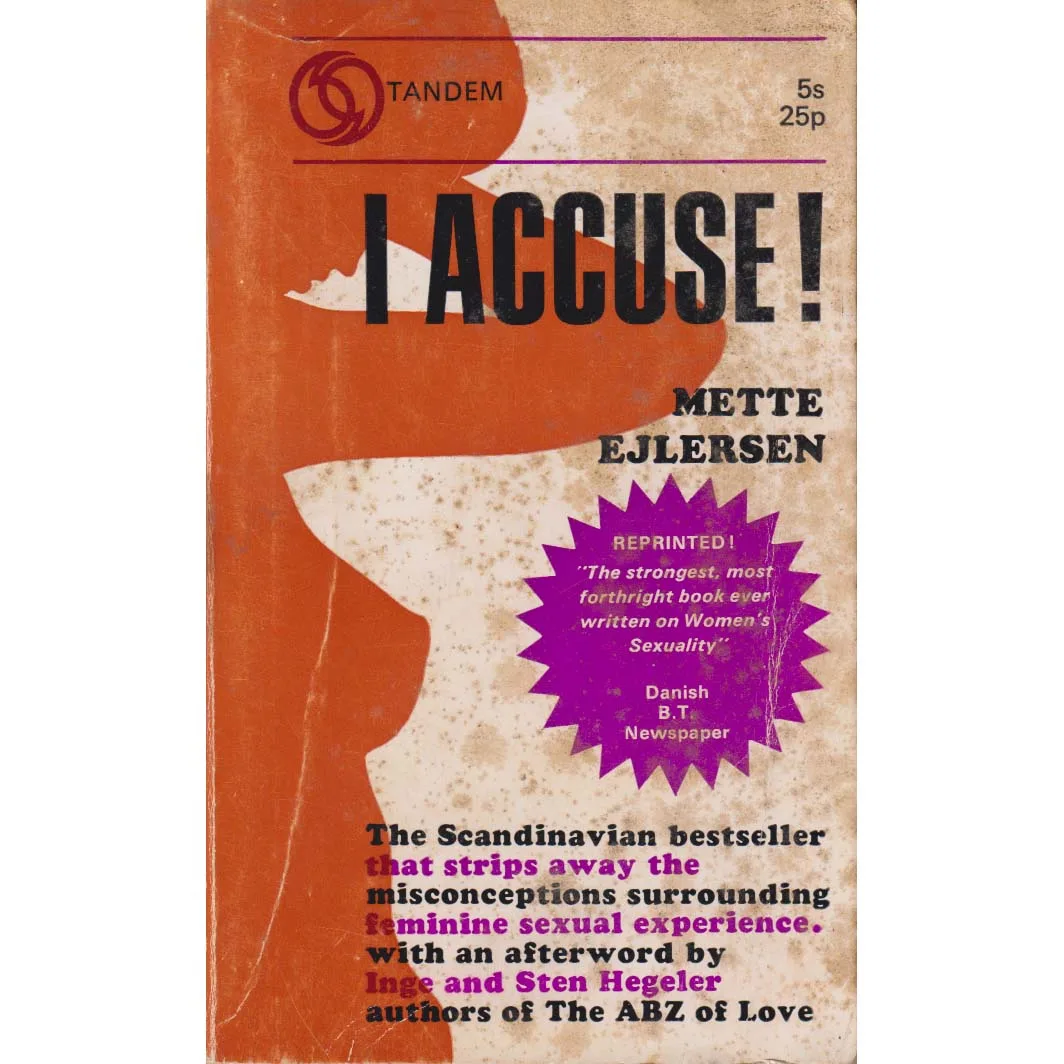
Publisher: Tandem
Format: Paperback
ISBN: none
I Accuse (1970) by Mette Ejlersen — Tandem
ISBN: None (because 1970 didn’t think every accusation needed a barcode)
Condition: Good (as sold by Crappy Old Books, where “Good” means “the cover’s holding up; the moral outrage is pristine”)
Some titles come with a whisper. I Accuse arrives with a finger pointed, a brow raised, and the clear expectation that you will stop what you’re doing and pay attention. It’s the literary equivalent of someone tapping a glass at a dinner party and announcing that, actually, they have a few things to say about how the world works—and no, they will not be keeping it light.
Mette Ejlersen’s I Accuse is very much a product of its era in the best possible way: sharp, direct, and charged with that late-60s/early-70s energy where complacency is treated as the real sin. The tone is urgent; the stance is uncompromising. This isn’t the sort of book that sidles up politely and asks permission to be “relevant.” It assumes it already is, and frankly it’s offended you ever doubted it.
What you get is a compact, punchy read with the feel of a moral grenade: personal testimony meeting social criticism, the private world crashing into the public one, and the constant undercurrent that silence is complicity. It’s the kind of book that doesn’t simply tell a story—it builds a case. It may not always be comfortable. It may not always be neat. But it’s rarely indifferent. If you like your reading to have a pulse, a point, and a willingness to glare at authority, this one obliges.
And there’s an extra layer of irony in reading a 1970 “I accuse” today, because time has a way of turning yesterday’s hot-button anger into today’s historical document. Which means you’re getting two books in one: the narrative itself, and the period atmosphere—the language, the assumptions, the shape of the outrage. Even if you disagree with parts of it, it’s fascinating to see what, exactly, demanded accusation then, and how the book positions the reader as witness, juror, and occasionally co-conspirator.
This is a Tandem edition, which fits perfectly: Tandem paperbacks have that no-nonsense, briskly accessible vibe—books made to be read, passed around, and argued over rather than admired from a distance. This isn’t a coffee-table ornament. It’s a conversation starter, and possibly a conversation-ender, depending on who’s in the room.
This copy is listed as Good, sold by Crappy Old Books, meaning it’s solid, readable, and nicely intact for a paperback that has probably been opened with intent. Expect some honest wear—light rubbing, perhaps a little page toning—but still very much ready to do what it was built to do: provoke thought, stir emotion, and leave you with at least one sentence ringing in your head.
Buy it if you like:
-
vintage paperback firebrands with something to prove
-
social critique that doesn’t apologise for having an opinion
-
books that feel like testimony rather than entertainment
-
1970s literature with edge, urgency, and conviction
I Accuse is not a gentle read—it’s a pointed one. A slim, serious burst of conscience from 1970, in Good condition from Crappy Old Books, ready to remind you that some paperbacks aren’t meant to soothe. They’re meant to poke.
Keep browsing: See more Womens books Other books by Mette Ejlersen
